
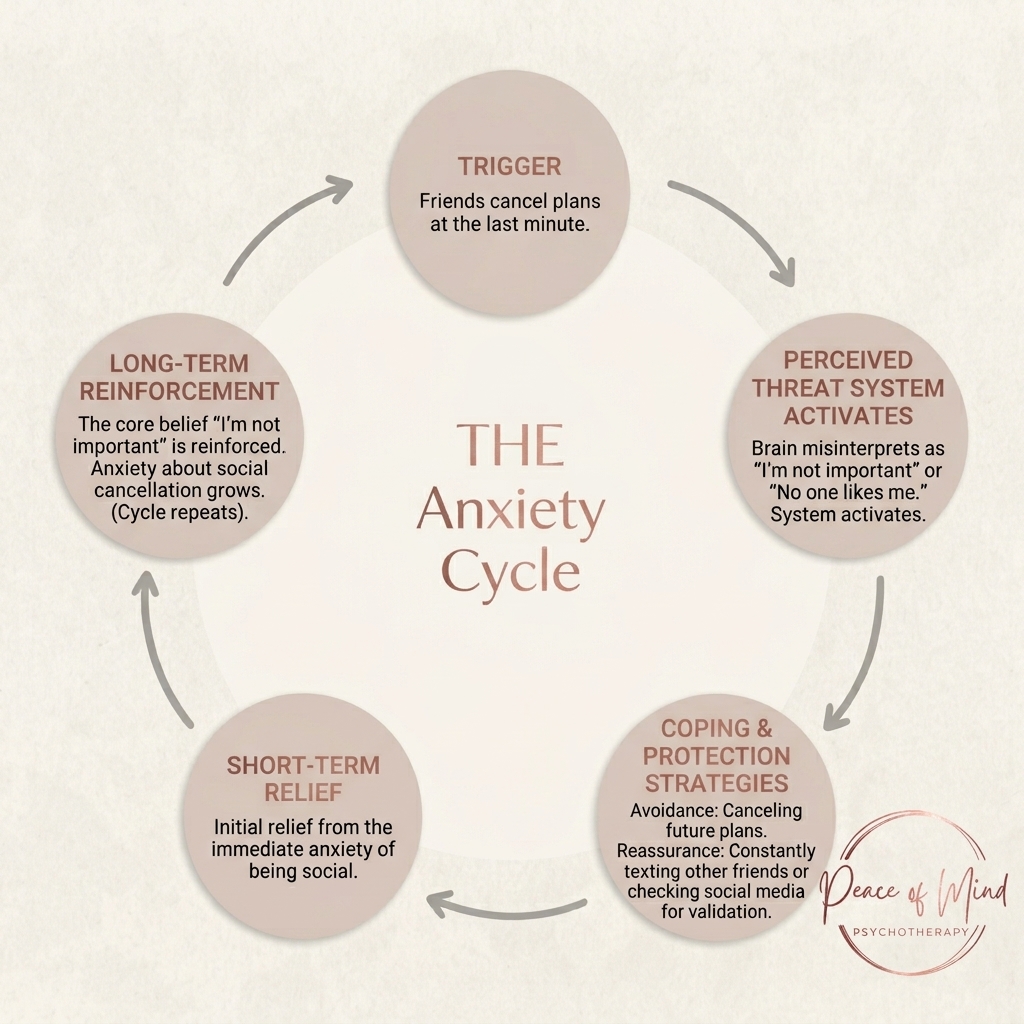
Have you ever lain awake at 2 a.m. replaying a conversation, or felt overwhelmed by a to-do list? If your heart races, your thoughts won’t slow down, or you constantly feel “on edge,” you may be experiencing anxiety.
What Is Anxiety?
Anxiety is your body’s built-in alarm system. It prepares you to respond to danger, but your brain can sometimes react to everyday stress like work, exams, or uncertainty as if you were facing a physical threat. A little anxiety can be helpful. It can improve focus, motivate you to prepare, and keep you alert. But when that alarm feels like it is always switched on, anxiety can begin affecting your daily life.
Anxiety can show up as:
- Racing or repetitive thoughts
- Constant “what if?” thinking
- Difficulty concentrating
- A racing heart, tight chest, or shallow breathing
- Muscle tension, shakiness, or stomach discomfort
- Trouble sleeping or relaxing
- Irritability, fatigue, or feeling overwhelmed
- Avoiding people, places, or responsibilities
When Does Anxiety Become Too Much?
Stress is a normal part of life, but anxiety may need extra attention when it starts interfering with the things that matter to you. Ask yourself: Is anxiety affecting your sleep, work, relationships, or ability to enjoy life? Are you avoiding activities simply to keep your anxiety under control? If anxiety is making your world feel smaller, reaching out for support can help. Needing support does not mean you are not capable. Sometimes, we all need help carrying something that has become too heavy to manage alone.
Small changes can help you reconnect with the present moment:
- Intentionally breathing slowly, try making your exhale longer than your inhale.
- Ground yourself with using the 5-4-3-2-1 grounding technique to focus on the present.
- Moving your body such as taking a short walk, stretching, or stepping outside.
- Write it down, put your worries on paper and make them feel more manageable.
- Talking to someone this could be a trusted friend, family member, partner, or professional can help you feel less alone.
Anxiety can feel overwhelming, but you do not have to face it alone. Small steps, support, and self-compassion can help you begin finding your way back to calm.
References
Beck, A. T. (2011). Cognitive therapy: Basics and beyond (2nd ed.). The Guilford Press.
Cannon, W. B. (1915). Bodily changes in pain, hunger, fear and rage: An account of recent researches into the function of emotional excitement. D. Appleton & Company.
Gerritsen, R. J., & Band, G. P. (2018). Breath of life: The respiratory vagal stimulation model of contemplative activity. Frontiers in Human Neuroscience, 12, 397. https://doi.org/10.3389/fnhum.2018.00397
Linehan, M. M. (2015). DBT skills training manual (2nd ed.). The Guilford Press.
Najavits, L. M. (2002). Seeking safety: A treatment manual for PTSD and substance abuse. The Guilford Press.
Pennebaker, J. W. (1997). Writing about emotional experiences as a therapeutic process. Psychological Science, 8(3), 162–166. https://doi.org/10.1111/j.1467-9280.1997.tb00403.x
Porges, S. W. (2011). The polyvagal theory: Neurophysiological foundations of emotions, attachment, communication, and self-regulation. W. W. Norton & Company.
Yerkes, R. M., & Dodson, J. D. (1908). The relation of strength of stimulus to rapidity of habit-formation. Journal of Comparative Neurology and Psychology, 18(5), 459–482. https://doi.org/10.1002/cne.920180503
Written by Jennifer Balangue