
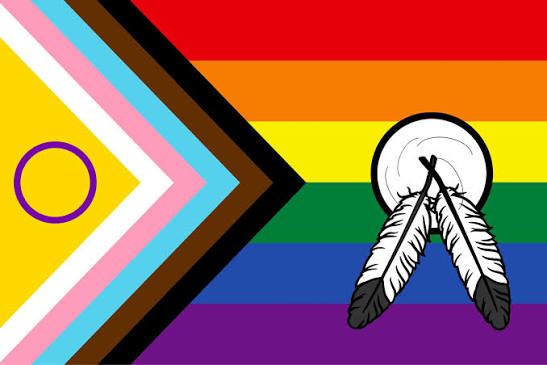
Every June, the world erupts into a beautiful, chaotic kaleidoscope of rainbows, glitter, and anthems. We march, we dance, and we celebrate the hard-won victories of the LGBTQ+ community. But if you’ve looked at the acronym lately, you might have noticed a couple of additions that deserve a lot more than just a passing glance: 2S.
While Pride is a vibrant look toward the future, the “2S” which stands for Two-Spirit is a powerful, sacred bridge to the past. To truly celebrate the full spectrum of love and identity, we need to talk about why Two-Spirit history is the ultimate masterclass in acceptance, and why it’s reshaping how we view Pride. What Does “Two-Spirit” Actually Mean? If you aren’t Indigenous to North America, it’s completely okay if you’re still learning about this. Two-Spirit is an umbrella term used by some Indigenous people to describe a person who manifests both a masculine and a feminine spirit within them. It was coined in 1990 at the Third Annual Intertribal Native American First Nations Gay and Lesbian American Conference in Winnipeg, Canada, specifically to reclaim traditional identities from colonial labels.
Here’s the mind-blowing part: long before Stonewall, and centuries before European settlers arrived on the continent, hundreds of Indigenous nations not only accepted gender fluidity and diverse sexualities, they revered them.
In many traditional cultures, Two-Spirit individuals weren’t cast out or tolerated, they were celebrated. They held honored positions as medicine people, marriage counselors, storytellers, name-givers, and keepers of oral history. They were seen as uniquely blessed to see the world through both male and female lenses. De-Centering the Western Lens of Pride When we think of queer history, we often start the clock at the Stonewall Riots of 1969. And while Marsha P. Johnson, Sylvia Rivera, and those brave pioneers deserve every ounce of our gratitude, the history of diverse genders and sexualities on this continent goes back thousands of years.
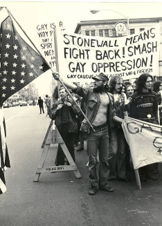
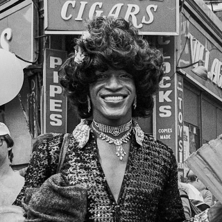
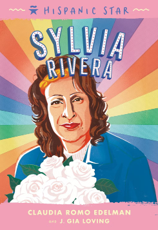
Figure 1. Members of the Gay Caucus of Youth Against War and Fascism (YAWF) rally under a banner reading “Stonewall Means Fight Back! Smash Gay Oppression!” during a Gay Liberation parade in New York City. Photo by Leonard Fink, courtesy of the LGBT Community Center National History Archive.
Figure 2. LGBTQ+ rights advocate Marsha P. Johnson smiling at the Pride March in New York City. Photo by Barbara Alper, 1982.
Figure 3. Front cover illustration of Hispanic Star: Sylvia Rivera, featuring artwork by Cheyne Gallarde. From Hispanic Star: Sylvia Rivera, by C. R. Edelman and J. G. Loving, 2023, Roaring Brook Press.
Celebrating LGBTQ+2S means acknowledging that queer history didn’t start with a riot in New York City it was already woven into the very soil we stand on. When colonization occurred, these sacred traditions were violently suppressed. Boarding schools, forced assimilation, and imposed religious beliefs tried to erase Two-Spirit people entirely. Therefore, putting the “2S” at the front or end of the acronym isn’t just about inclusion it’s an act of decolonization and resistance. So, how do we honor the entire LGBTQ+2S community without letting it just become alphabet soup? It comes down to moving past the corporate rainbows and getting intentional.
- Amplify Indigenous LGBTQ+2S creators, activists, and artists. Check out the poetry of Billy-Ray Belcourt, the art of Kent Monkman, or the advocacy of Geo Neptune.
- Pride is a party, but it’s also a protest and a history lesson. Take a little time to learn about the traditional lands you live on and the Indigenous histories tied to them.
At its core, Pride is about the freedom to exist exactly as you are, without apology. By embracing the 2S in the conversation, we realize that living authentically isn’t a modern trend or a passing fad. It is an ancient, beautiful human truth. This Pride season, let’s dance, let’s love, and let’s remember to honor all the spirits that paved the way for us to be here.
Happy Pride!!
References
Alper, B. (1982). Marsha P. Johnson at the 1982 Pride March [Photograph]. Getty Images.
Canada Institutes of Health Research. (2020). What and who is Two-Spirit? Government of Canada. https://cihr-irsc.gc.ca/e/52214.html
Fink, L. (ca. 1970s). Stonewall Means Fight Back! Smash Gay Oppression! [Photograph]. Leonard Fink Collection, LGBT Community Center National History Archive.
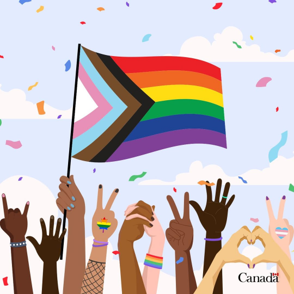
Government of Canada. (n.d.). Progress Pride flag and diverse hands celebrating [Digital illustration]. Department of Canadian Heritage. Government of Canada
Hunt, S. (2016). An introduction to the health of Two-Spirit people: Historical, contemporary and emergent issues. National Collaborating Centre for Aboriginal Health.
Pruden, H., & Salway, T. (2020). Two-Spirit: A terminology of our own. LGBT Health, 7(8), 397–400. https://doi.org/10.1089/lgbt.2020.0290
Robinson, M. (2020). Two-Spirit and LGBTQIA+ Indigenous peoples: A review of wellness and resilience. Journal of Homosexuality, 67(12), 1690–1708. https://doi.org/10.1080/00918369.2019.1604473
Written by Jennifer Balangue